Panama Canal Eco Tours: Wildlife, Locks and Rainforest
A Panama Canal eco tour is the Canal seen as the rainforest system that feeds it. There are three ways to do it: a wildlife safari by boat on Gatún Lake with an hour on foot in Soberanía National Park, a partial or full transit through the locks themselves, or the observation decks at Miraflores. The safari is the one that earns the word “eco” — it leaves at seven in the morning, which is when the animals are awake.
Most people arrive thinking of the Panama Canal as engineering. It is — but it is also, and this is the part almost nobody is told, a working piece of ecology. The Canal doesn’t run on sea water. It runs on rain. And the rain comes from the forest that was deliberately left standing all around it.
Once you know that, the whole thing rearranges itself. The rainforest beside the locks isn’t scenery that survived by luck — it’s infrastructure. Here’s how to actually see it.
Why the Canal watershed is protected rainforest
Every ship that transits uses fresh water, and that water comes from Lago Gatún — a lake created by damming the Chagres, in its day the largest artificial lake in the world. Rain fills the lake, the lake fills the locks, the locks move the ships.
So the forest around the Canal is maintained on purpose. The trees generate the rainfall; the rainfall keeps the Canal working. Cut the forest and you don’t get a prettier canal, you get a canal with less water.
One detail worth knowing when you watch a ship go through: the new expansion locks recycle their water, holding much of it back in basins for the next transit. The original locks release theirs to the sea every time. You are looking at two different centuries of thinking about the same liter of water.
And the by-product of all this is the thing we say most often: a twenty-minute drive takes you from skyscrapers to tropical rainforest. There is no other country where that sentence is true.
Three ways to experience the Canal
They are genuinely different days, and people often book the wrong one.
Transit the locks. You’re on a boat going through the Canal itself. The partial transit through two locks takes five to six hours; the full transit through three takes eight to ten. Our honest advice: the two-lock transit gives you the whole experience. You feel the chamber fill, you watch the gates, you pass under the bridges. The extra three or four hours of the full transit are mostly open water.
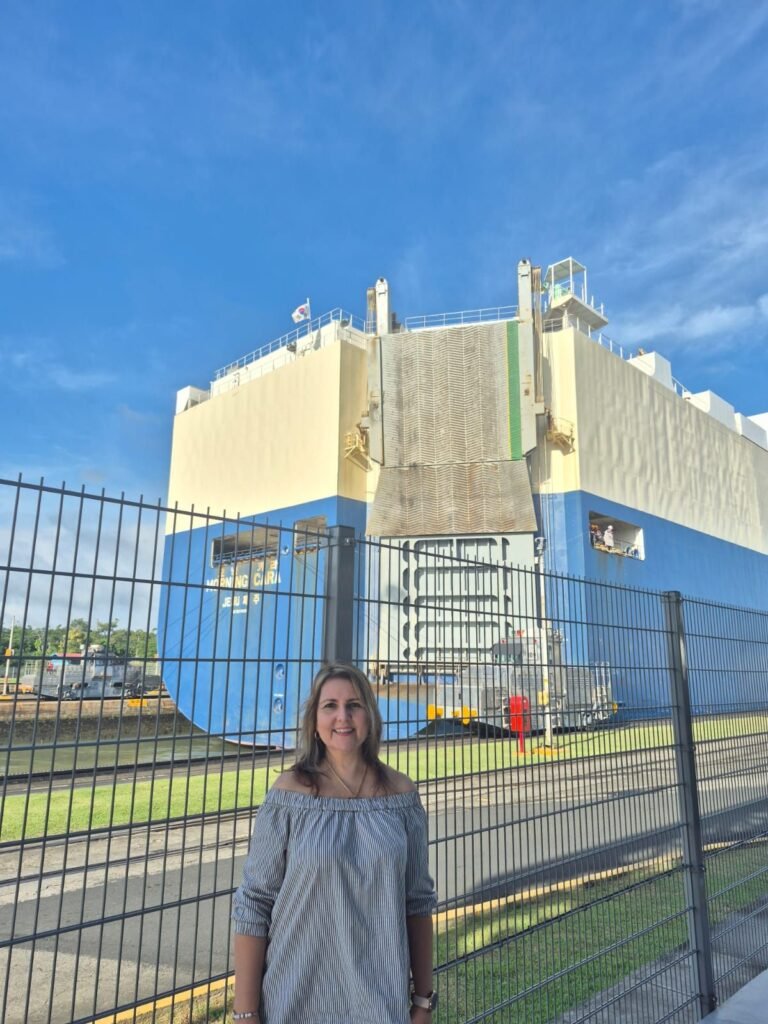
Visit Miraflores. Observation decks over the locks and an IMAX film. Doable on your own by Uber — details in our Panama City guide.
The wildlife safari on Gatún Lake. No locks. You navigate the lake itself, alongside the ships, and then into the channels where the animals are. This is the one that answers “eco tour” properly, and it’s the one this guide is really about.
What the wildlife safari day actually looks like
You leave at seven in the morning, and both reasons matter. The animals are at their most active early — by midday the monkeys have gone quiet and found shade. And leaving at seven runs you against the commuter traffic toward the Centenario bridge instead of sitting in it.
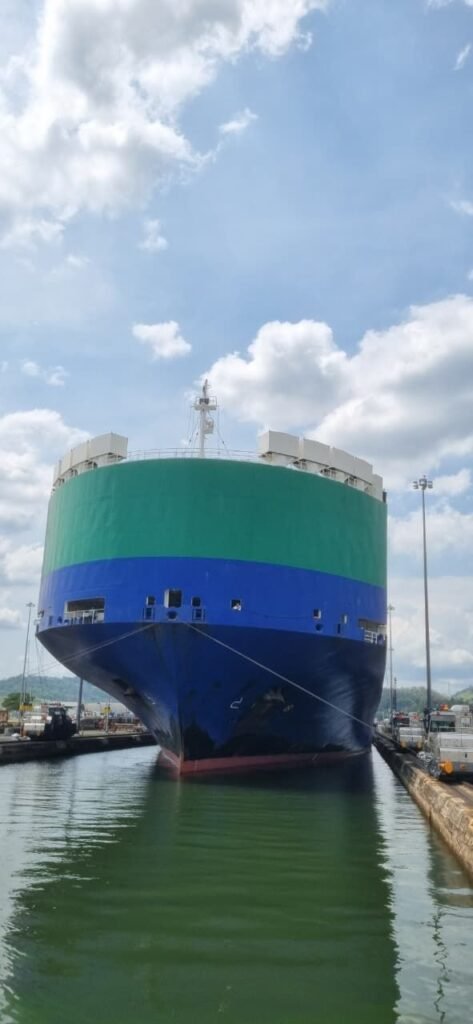
On the water you start out on the shipping lane, which is a strange and excellent feeling: a fifteen-story wall of cargo ship sliding past a small boat. Then you turn off into the channels between the islands, and the day changes character completely — engine down, quiet, watching the treeline.
Afterwards there’s about an hour on foot in Soberanía National Park — the half people don’t expect to enjoy most. From the water you see the big, obvious animals. On the trail you see how the forest is put together: leafcutter ant highways, termite architecture, agoutis in the undergrowth, and if the morning is generous, an ocelot.
How long the day runs depends on what you book with it:
- Panama Canal wildlife safari only. Departs at 7:00 am, back at your hotel between 11:30 am and 12:00 pm. No lunch.
- City tour only. Departs at 9:00 am, back at your hotel at 12:00 pm. No lunch.
- Safari and city tour combined. 7:00 am to 3:30 or 4:00 pm, lunch included.
Wildlife you can realistically expect
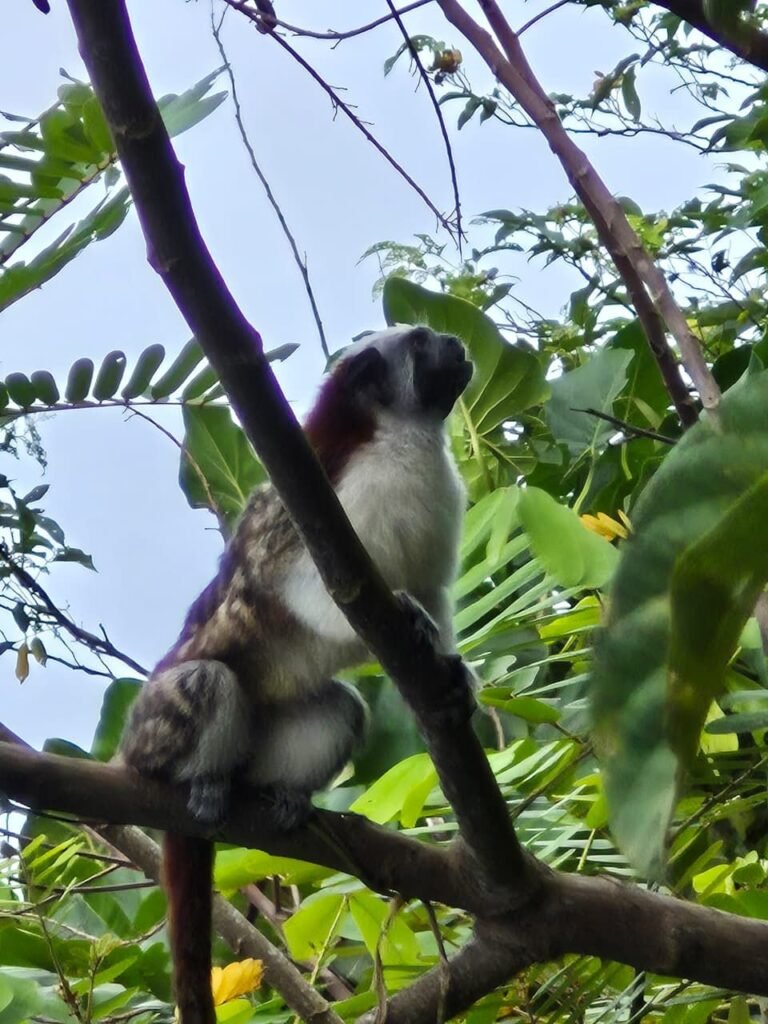
From the boat, the ones we see regularly: howler monkeys, white-faced capuchins and tamarins; iguanas draped over branches; crocodiles on the banks; and birds — toucans, herons, ospreys, and snail kites working the shallows.
On the walk: leafcutter ants, termites, agoutis, ocelots, and the insect life that a good naturalist can make more interesting than any of the above.
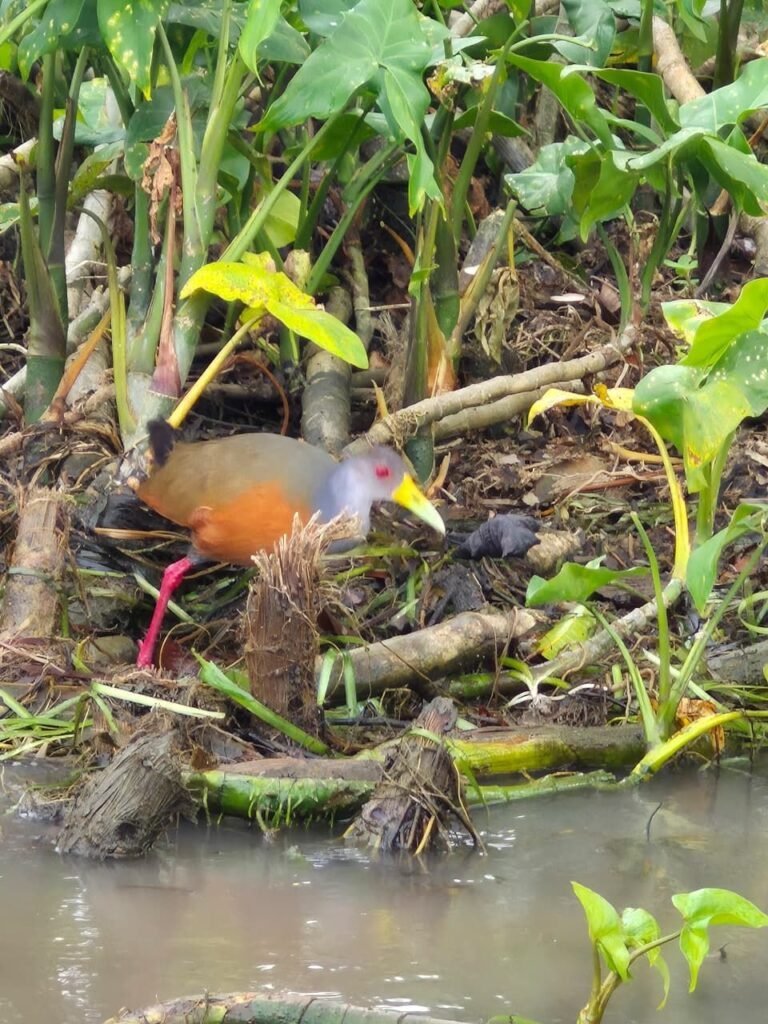
One honest note before you book. These are wild animals. They are not in enclosures, they are not fed to keep them near the boat, and nobody — including us — can guarantee that you will see everything on every trip. What we can tell you from running this route continuously is that you will see something, that the seven o’clock start stacks the odds heavily in your favor, and that in our experience guests come back having seen more than they expected, not less.
Why we don’t feed the monkeys
It’s common on this lake to see boats attract monkeys aboard with fruit. It makes for an easy photograph and we understand the temptation. We don’t do it, and it is worth explaining why.
Feeding wild primates changes their behavior, makes them dependent on boats, exposes them to human food and disease, and puts passengers at risk when an animal decides your bag is food too. The photograph is better on our boat anyway — it’s a monkey behaving like a monkey.
The same logic runs through the whole day: distance kept, no baiting, no handling.
Guides who are actually biologists
The people we send out on this tour are biologists and naturalists, not general guides who learned the animal names. It sounds like a small distinction until someone on the boat asks why the howlers are calling now and not an hour ago, and gets a real answer — feeding habits, breeding cycles, how the species fits the forest. That is the difference between a boat trip with animals in it and understanding the ecosystem the Canal is built inside.
See the Canal from the water
The wildlife safari leaves at seven, runs alongside the ships on Gatún Lake, and finishes with an hour in Soberanía National Park — with a biologist, and without feeding a single animal. Back at your hotel between 11:30 am and midday — or out until 3:30 or 4:00 pm if you add the city tour, lunch included.
See the wildlife safari Transit the locks
Not sure whether you want the transit or the safari? Ask us on WhatsApp — they are very different days.
Birdwatching along the watershed
Panama ranks in the global top ten, and the top five in Latin America, on eBird’s Global Big Day — the worldwide count of species recorded in a single day. For a country this size that is remarkable, and the Canal watershed is a large part of the reason: protected forest, water, and two continents’ worth of migration funnelling through a narrow isthmus.
On the Pipeline Road route, the birds people come for are toucans, tanagers, trogons, motmots, flycatchers and honeycreepers. Our birdwatching tour works this area, and it starts even earlier than the safari — birding is a dawn activity or it isn’t birding.
Best time of day, and time of year
Time of day matters more than season. Early morning is when the forest is awake, the light is good and the heat hasn’t arrived. A midday boat trip on this lake is a pleasant cruise; a seven o’clock one is a wildlife tour.
On season: the dry months, December to April, are the easier ones for being on the water and on the trail. The green season, May to November, is wetter but the forest is at its most alive and there are fewer boats. We run this all year.
Making it a full day
The pairing we recommend most is the wildlife safari combined with the city tour — out at 7:00 am, back at 3:30 or 4:00 pm, lunch included, and you’ve seen the Canal from the water and the city from the ground in a single day. For visitors with three days in Panama, this is the day that earns its place.
If you’re assembling a longer trip around it, the eco tours overview shows how the Canal fits with the rainforest, the Caribbean and the highlands.
Common questions
What is a Panama Canal eco tour?
It is the Canal seen as the protected watershed it is, rather than only as engineering. In practice that means a boat on Gatún Lake alongside the transiting ships and into the wildlife channels, followed by a walk in Soberanía National Park — rather than a lock transit or a visit to the Miraflores viewing decks.
Are wildlife sightings guaranteed on the Gatún Lake safari?
No. These are wild animals in open forest, not an enclosure, and we do not feed them to keep them near the boat. What we can say is that the seven o’clock departure puts you out when the animals are most active, and that guests routinely see monkeys, iguanas, crocodiles and a good range of birds.
Does the Panama Canal use fresh water?
Yes. Every transit uses fresh water from Lago Gatún, which is fed by rainfall from the surrounding tropical forest. That is why the watershed forest is deliberately protected: the trees generate the rain, and the rain keeps the Canal operating. The newer expansion locks recycle much of their water, while the original locks release theirs to the sea.
Should I do the full Canal transit or the partial one?
The partial transit through two locks, at five to six hours, gives you the complete experience. The full transit through three locks takes eight to ten hours, and the additional time is largely open water.
What time does the wildlife safari leave?
There are three combinations. The Panama Canal wildlife safari on its own departs at 7:00 am and has you back at your hotel between 11:30 am and 12:00 pm, with no lunch. The city tour on its own departs at 9:00 am and returns to your hotel at 12:00 pm, also with no lunch. The two combined run from 7:00 am to 3:30 or 4:00 pm, with lunch included. The early start is deliberate: the animals are most active at dawn, and the drive runs against the morning rush hour.
Why does Eco Trips not feed the monkeys?
Because it changes wild behavior, makes the animals dependent on boats, exposes them to human food and disease, and creates risk for passengers. It is common practice on the lake and we have chosen not to do it. Our guides keep distance instead.
What birds can you see around the Panama Canal?
Along the Pipeline Road and the watershed: toucans, tanagers, trogons, motmots, flycatchers and honeycreepers, with herons, ospreys and snail kites over the water. Panama ranks in the global top ten on eBird’s Global Big Day, and this watershed is a large part of the reason.
Ready to see the Canal from the water? The wildlife safari leaves at seven with a biologist aboard, and finishes on foot in Soberanía. ★4.9 (337 reviews) — book via WhatsApp.